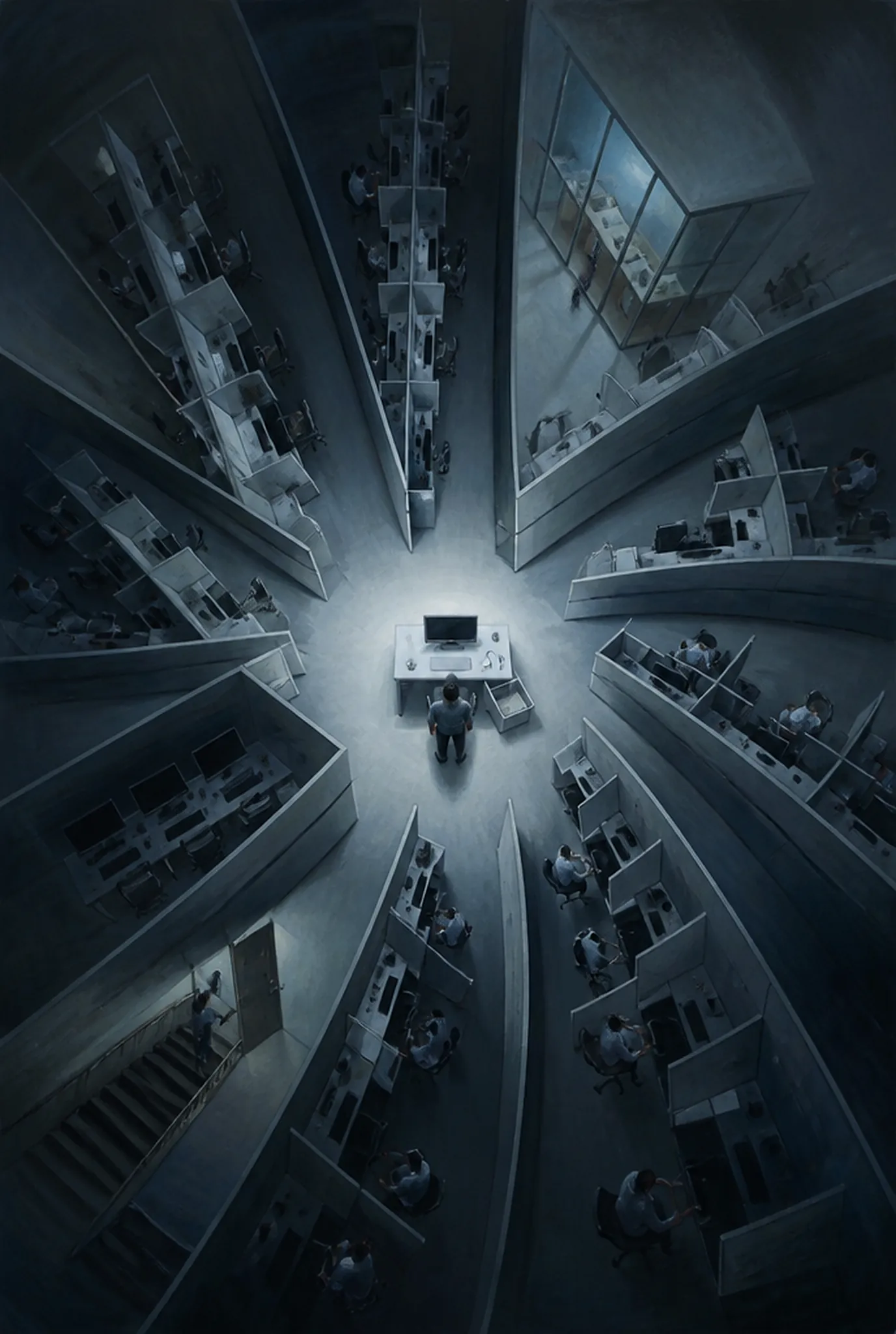
 01
The fall
A man loses his job and, in the same night, his innocence.
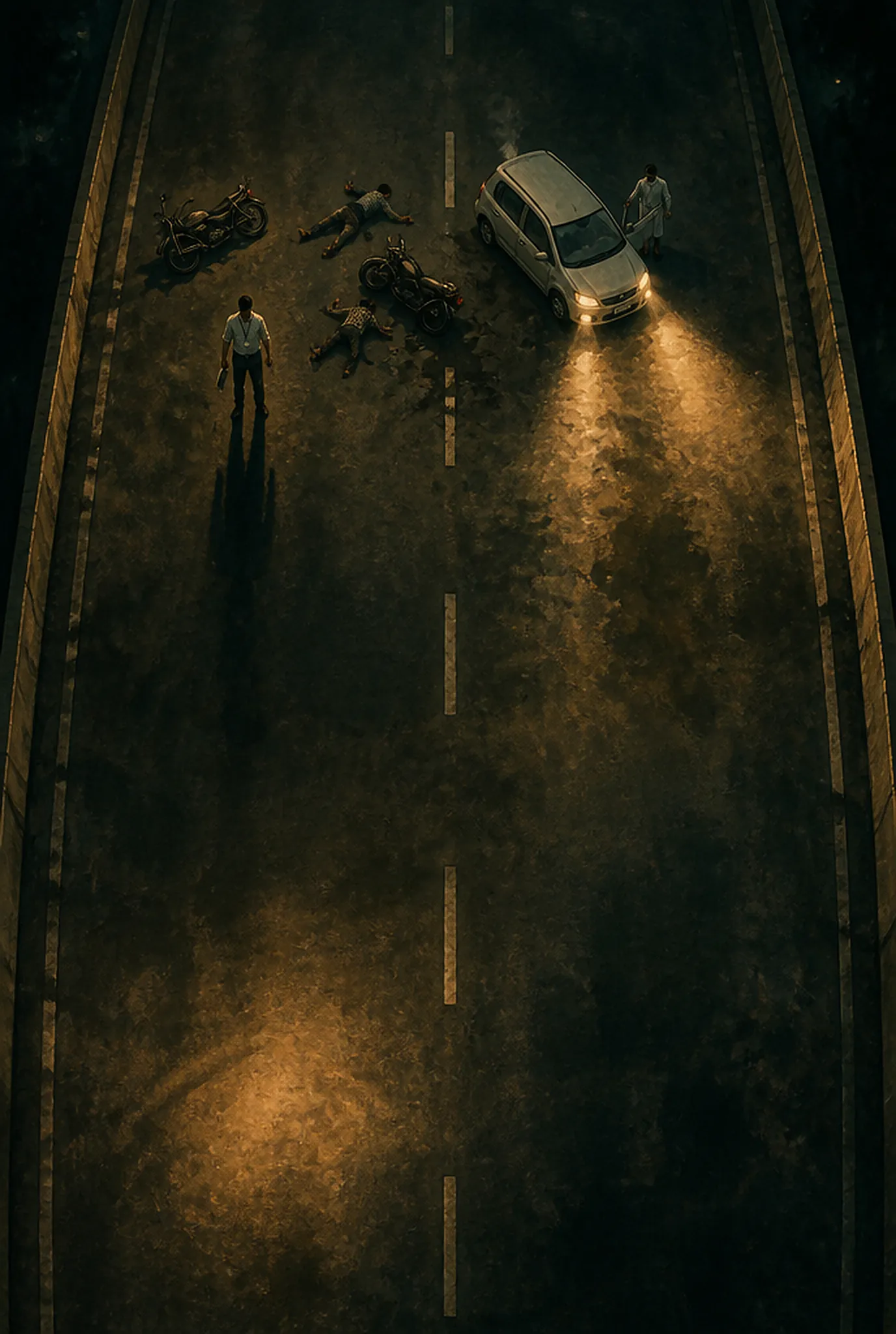

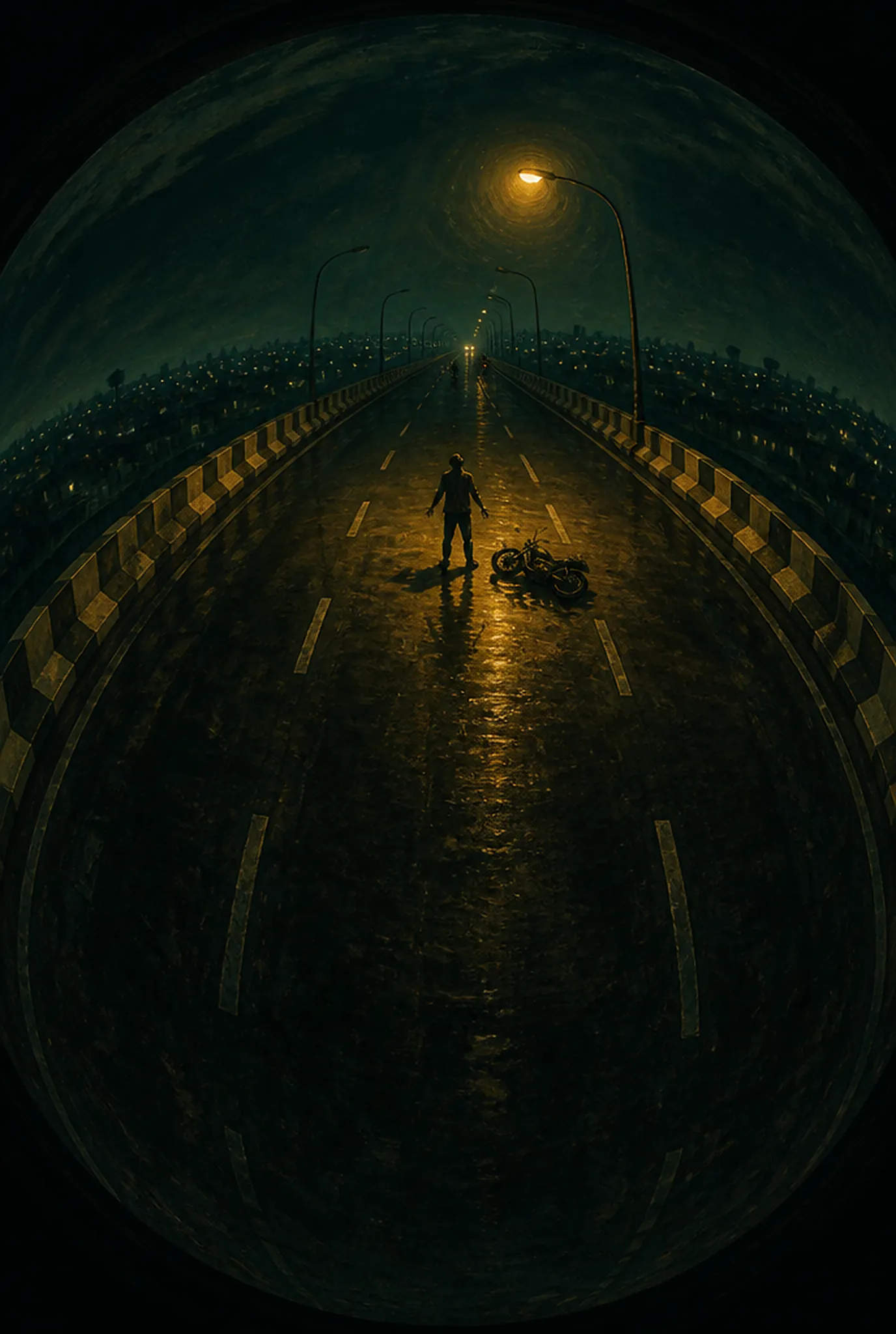
A mild office worker helps his elderly landlord hide two injured rowdies inside the water tank on their terrace.
What he does not notice for two more days is that he also took their bag. Eighty lakh rupees belonging to the most feared man in the city.
An honest man tries to do the right thing, twice, and both times it costs him everything he has left.
Two men are hidden in a water tank. A family that has spent three years unable to say thank you to anybody finally learns how.
Tank You holds both. The object the whole plot sits on, and the sentiment the film ends on. It reads as a joke on the poster and as a gut punch after the credits.
It opens like a domestic comedy. A father plaits his daughter's hair. A wife loses an argument to a tap that will not run. Ninety minutes later there are two bodies on a landlord's living room floor. The film never announces the turn.
Play everything straight. Nobody in this film knows they are in a comedy. The funniest scenes are played by people who are frightened, and the most frightening scenes are played by people being polite.
Fast, ugly and over before it feels finished. Nobody wins a fight because they are the hero. The only person who ends a fight cleanly is a housewife with an iron pan, and she does it in four seconds because she is furious, not because she is brave.
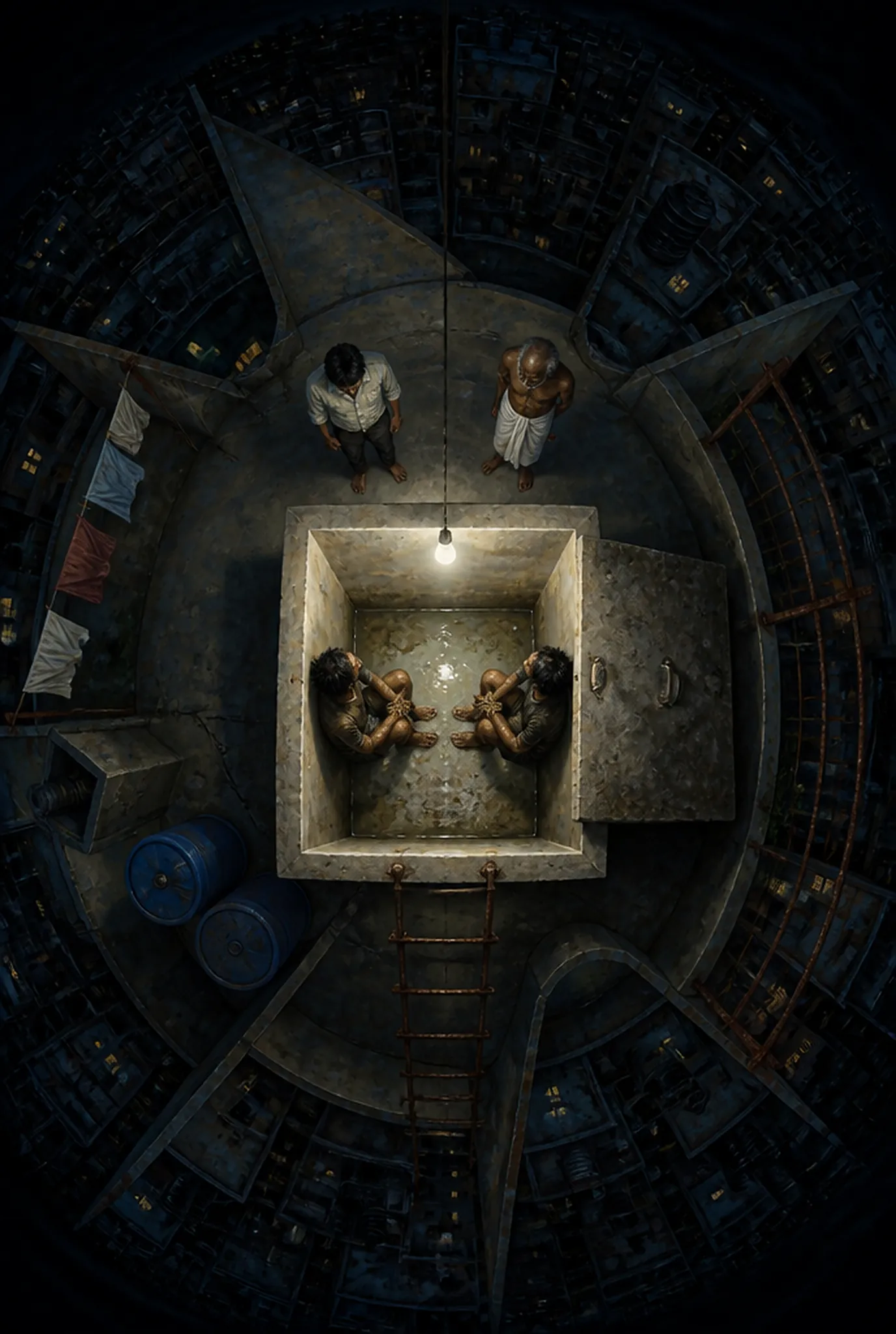 The terrace
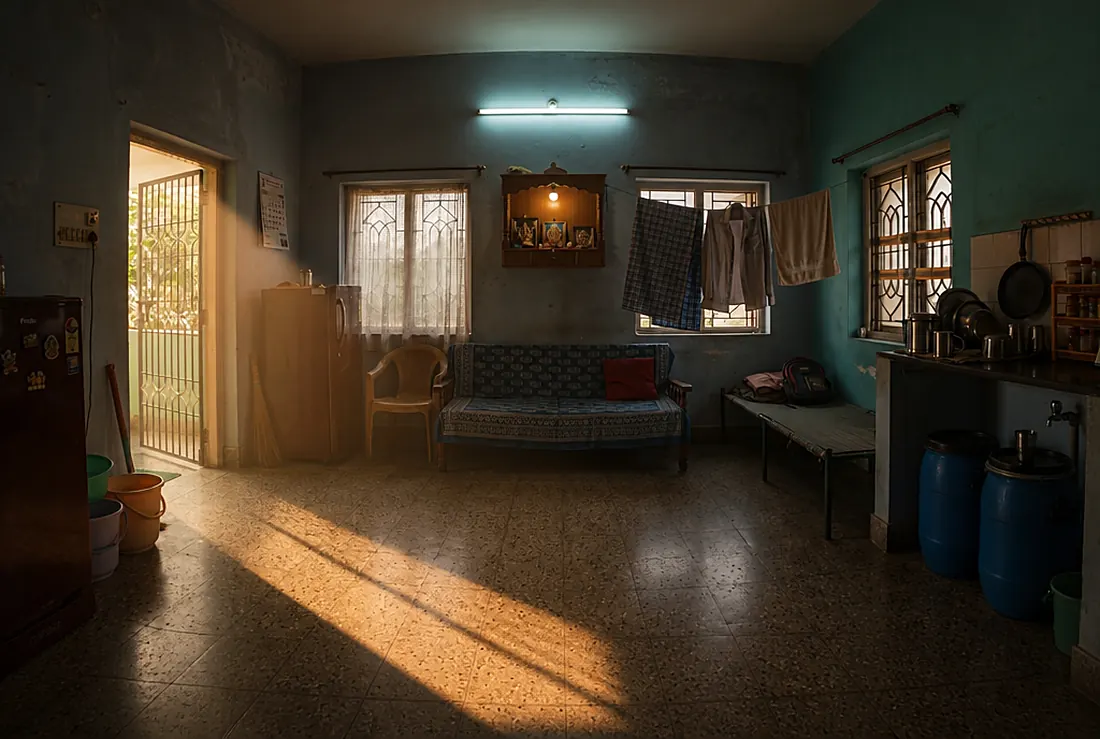 First floor
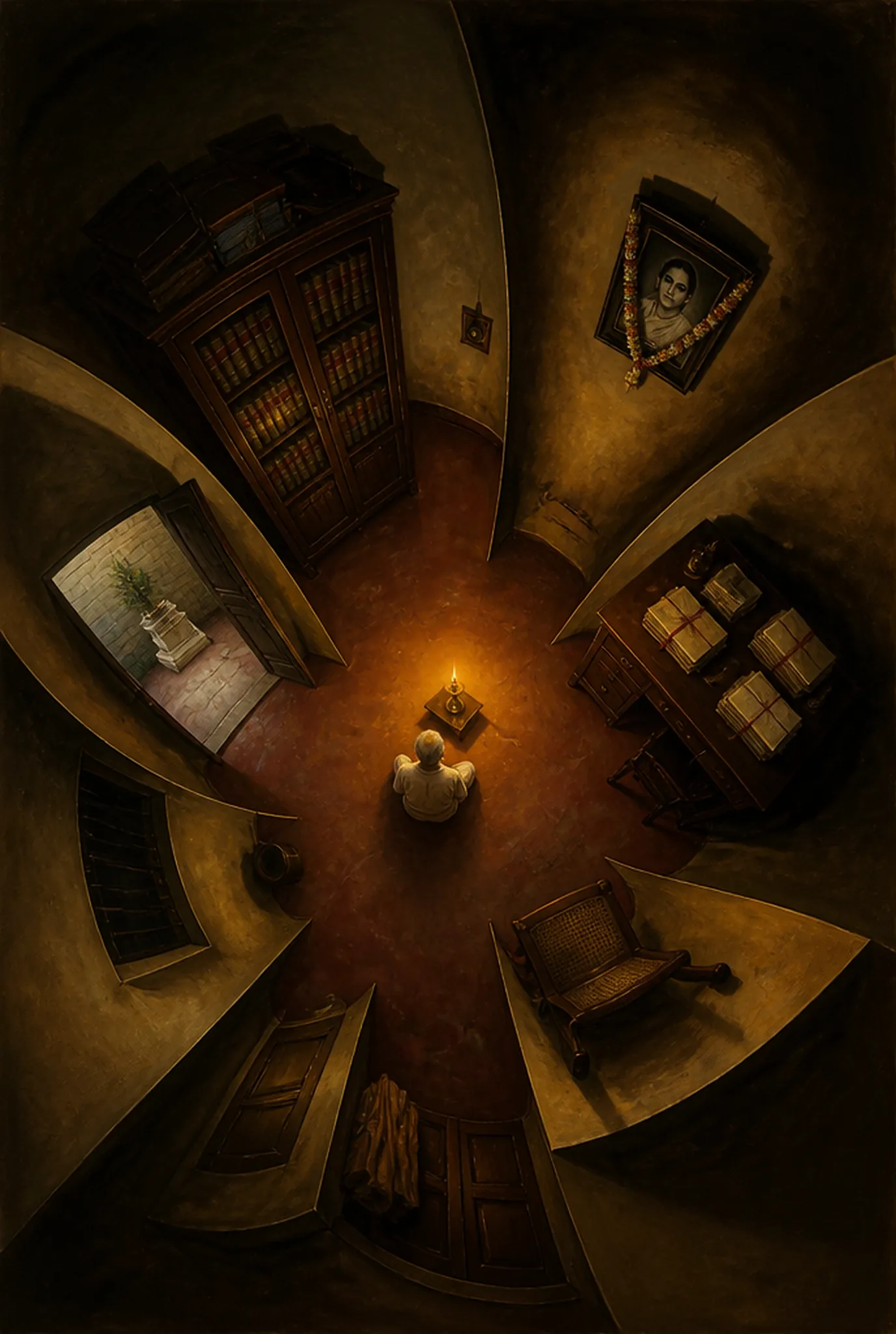 Ground floor
The cement water tank. What everybody in the house is standing on top of and cannot see.
Varun and his family. Clothes on the line, a cracked windowpane taped over, a tap that will not run. The present.
Ramanujam. Ironed, exact, law books, a garlanded photograph, a Suprabatham at dawn. The past.
01A man loses his job and, in the same night, his innocence.
02Who is in the tank, and who is looking for them. Ends at interval.
 03
Eighty lakhs enters the house. A child spends some of it.
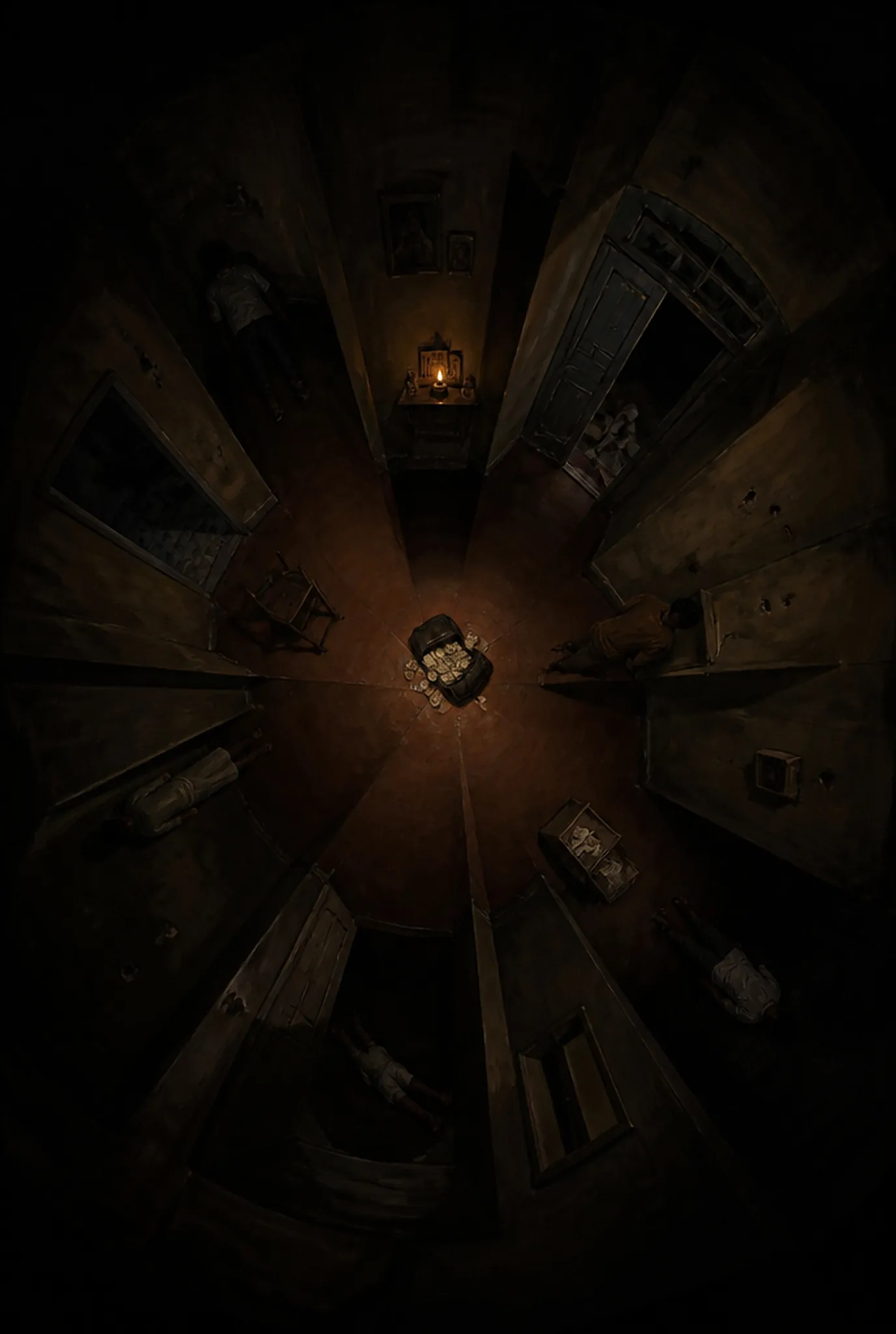 04
Every thread arrives at one living room on one night.
05A funeral, an inheritance, and a story told on a bike.
The first half is a mystery the audience is inside of. The second half is a countdown the characters do not know has started.
Varun plaits his daughter's hair while his wife reminds him, again, that she pawned her mother's jewellery for a flat that exists only on paper. Six months of EMI unpaid.
He rides Thamarai to school telling her a story about his college days in which he is the hero. She catches him inventing it from shop boards on the road.
At the office he is fired. Not shouted at. Fired politely, by Rupesh, who explains it is basically a fitment issue and asks him to leave the ID card on the table.
Alone on the empty bridge, Varun stops and screams at the city until it turns into crying. Then he gets back on the bike.
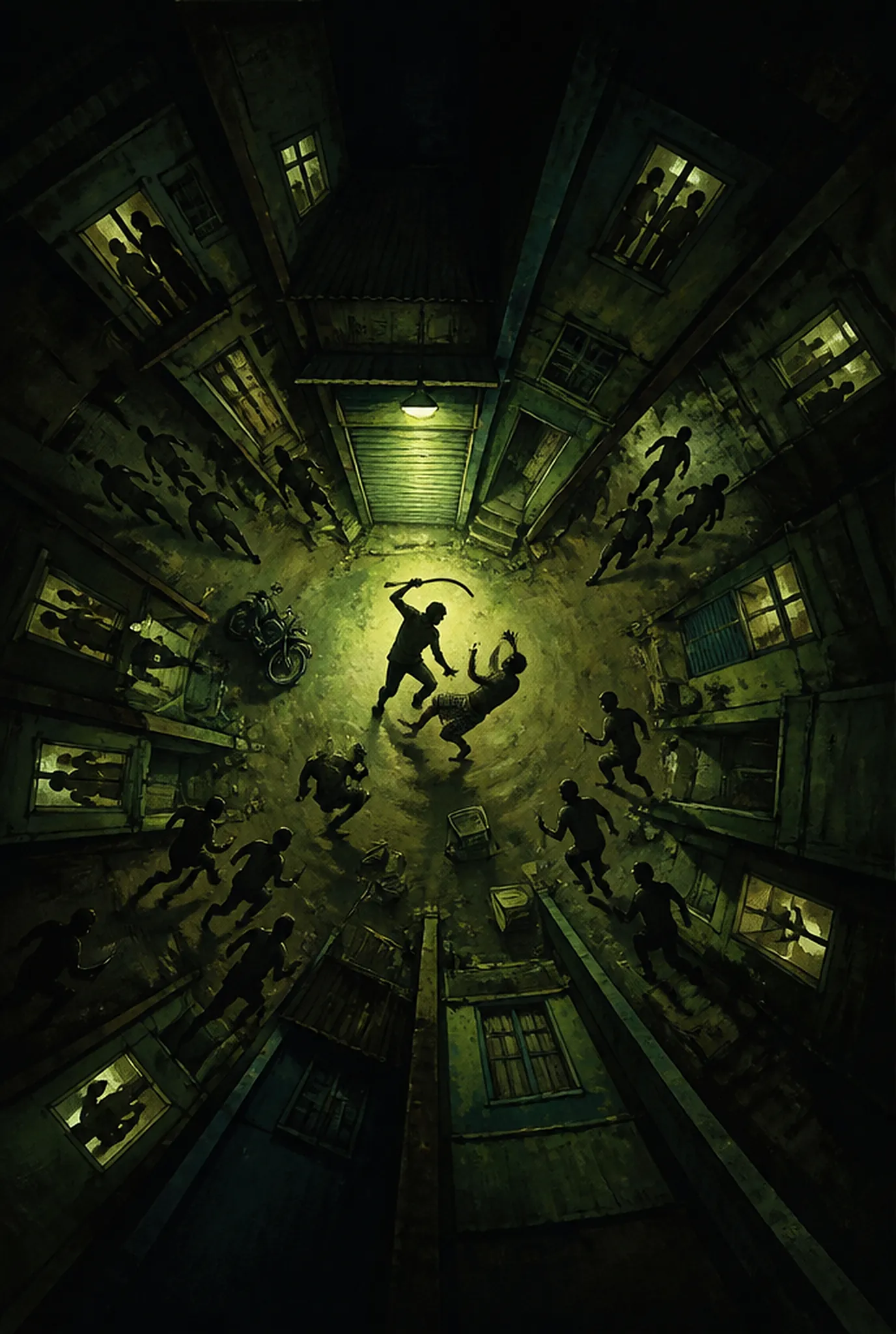
A bike cuts across him. He swears at it, once, before he can stop himself. The bike turns around. Kumar and Sekar ride alongside him for a kilometre, kicking his bike out from under him for entertainment.
Then headlights bloom behind them. A car comes out of the dark and takes their bike square on. Kumar gets up with a knife and walks toward the car door. Varun's hand finds a broken silencer on the road. He does not decide. He swings.
He gets home at 3:20 AM and fills two barrels of water. His wife, half asleep, tells him the tank still is not working.
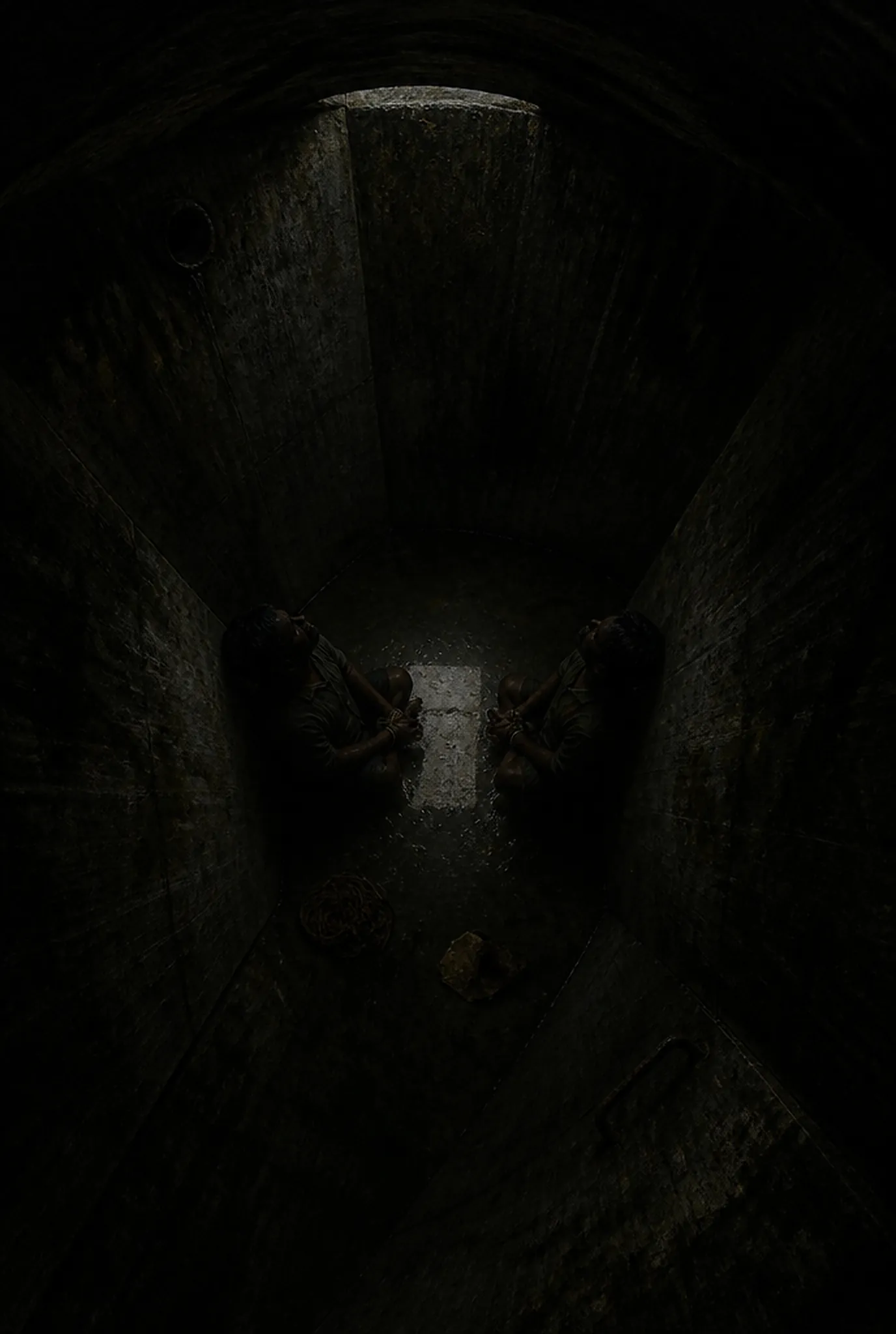
Midday. Varun and Ramanujam climb to the terrace with a packet of bread. Varun slides the lid off the tank. Kumar and Sekar are inside, bound, gagged, blinking up at the light.
The driver of the car was Ramanujam, coming off a phone call with the son who lives abroad and has just told him that his house and his country are not worth his time.
And Kumar, half conscious on the tar, recognised him. Vakeel.
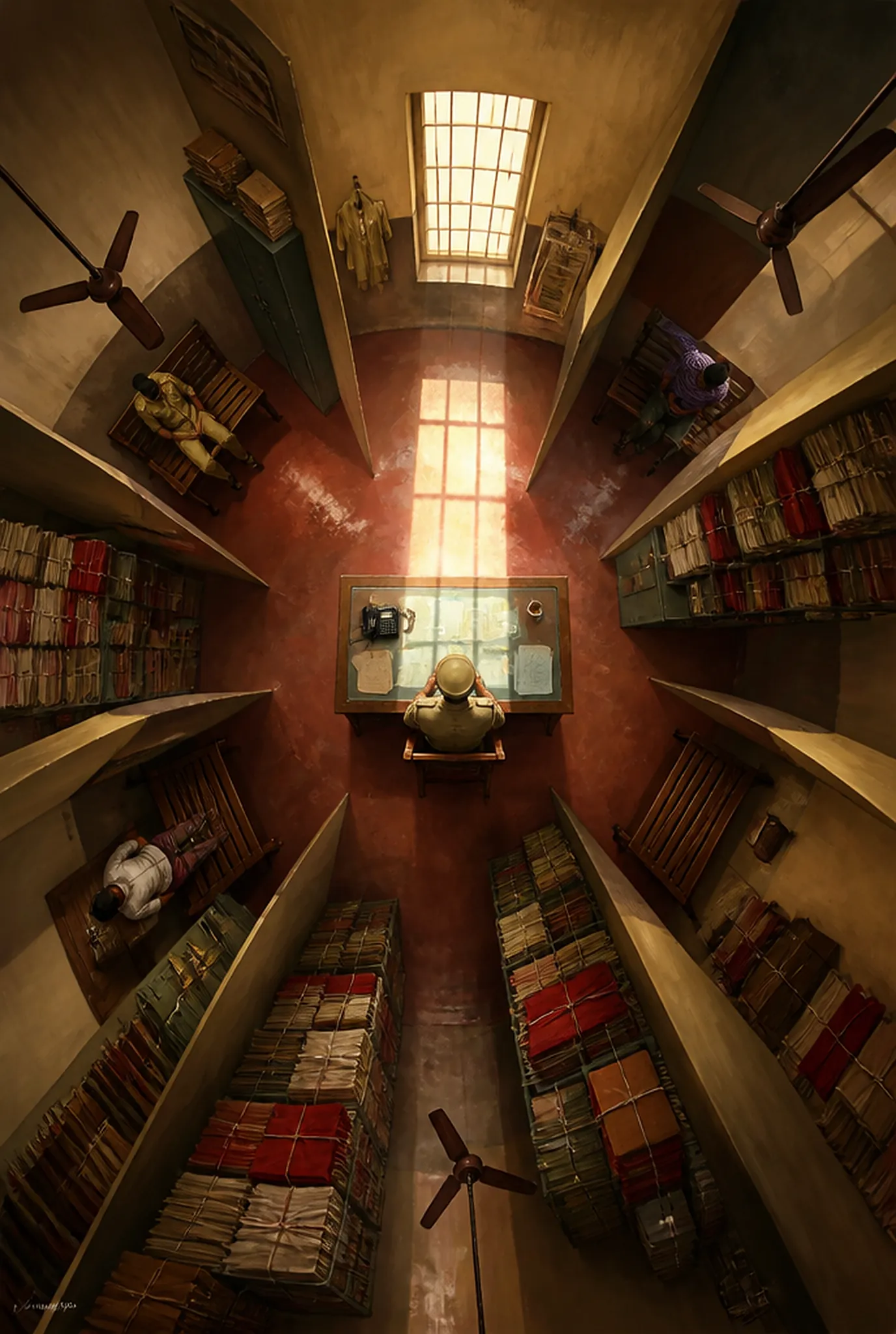
The two men come through the front door that night and put Varun on the floor. Kaveri walks out of the kitchen, sees two strangers standing over her husband, picks up the iron pan, and drops both of them.
Varun makes the call. He offers Bottle Babu his own men back. Babu's answer is that he will kill Kumar, kill Sekar, and kill Varun in a way this city has not seen.
The phone rings again immediately. It is an insurance telemarketer. Then it rings a third time. It is a Sub Inspector, asking whether Varun happened to be on the Velachery bridge on the night of May 22.
Interval
Kaveri does not shout. She makes a case, and it is a good one. Six months of pending EMI, a judgement due in four days, and three years in which she has not once asked why.
That night Thamarai slides the bag out from under the bed and takes a few notes. Not a bundle. A few. She spends the next day at a theme park with Priya, handing five hundred rupee notes across counters with the flat handed confidence of a woman settling a bill.
Varun takes the bag off the bridge without noticing
Kaveri argues for two lakhs ten thousand. Four days.
Thamarai takes a few notes from under the bed
She presses the leftovers on Priya, to avoid her mother
Priya gives them to a money lender humiliating her mother
Sukumar takes the money off the lender. His street.
Sukumar, famously stingy, buys a round at the wine shop
A ceiling fan turns the top note. The serial ends in 33.
The chain runs backwards through the film in one night
33 is Bottle Babu's lucky number. He trusts it the way other men trust God.
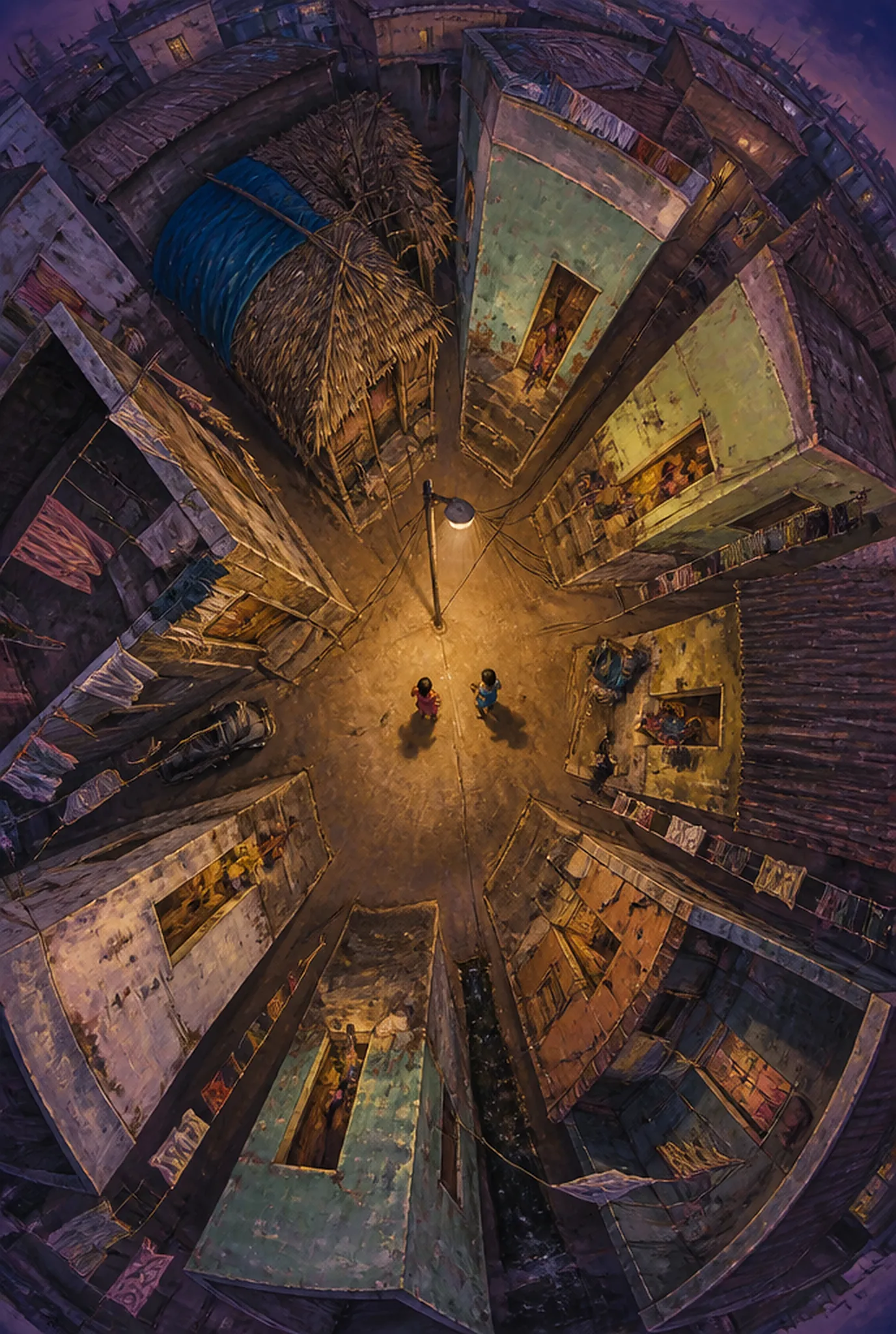
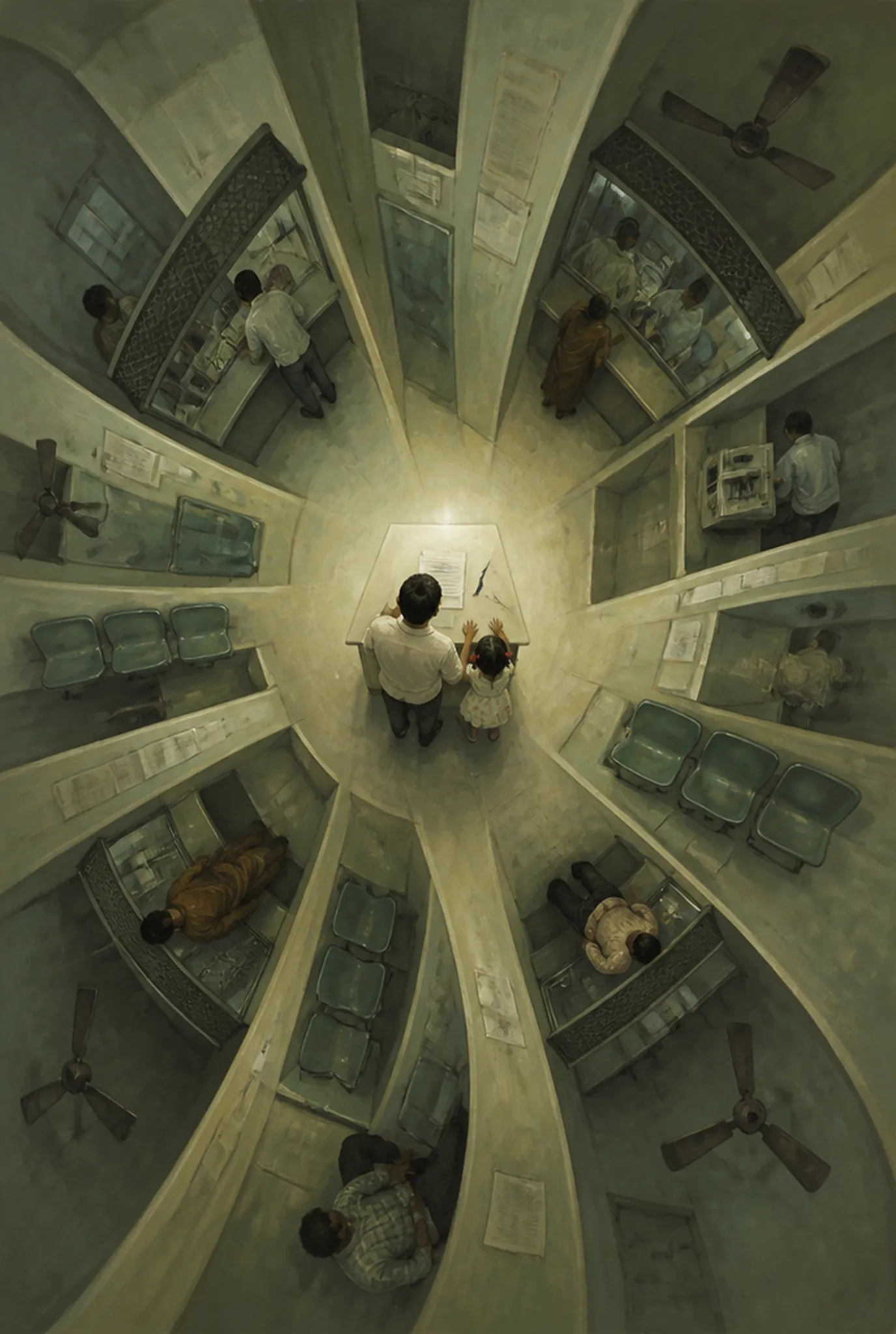
The judgement lands. It goes to the builder. The two lakhs are gone. Varun breaks down on the bank steps in front of his daughter.
Outside, a black Scorpio with a plate ending 33 rolls to a stop across the road. Bottle Babu works out exactly what was done to him, assembles it with enormous satisfaction, and gets it entirely wrong.
A voice from the doorway says Babu's name in a tone nobody in this city uses.
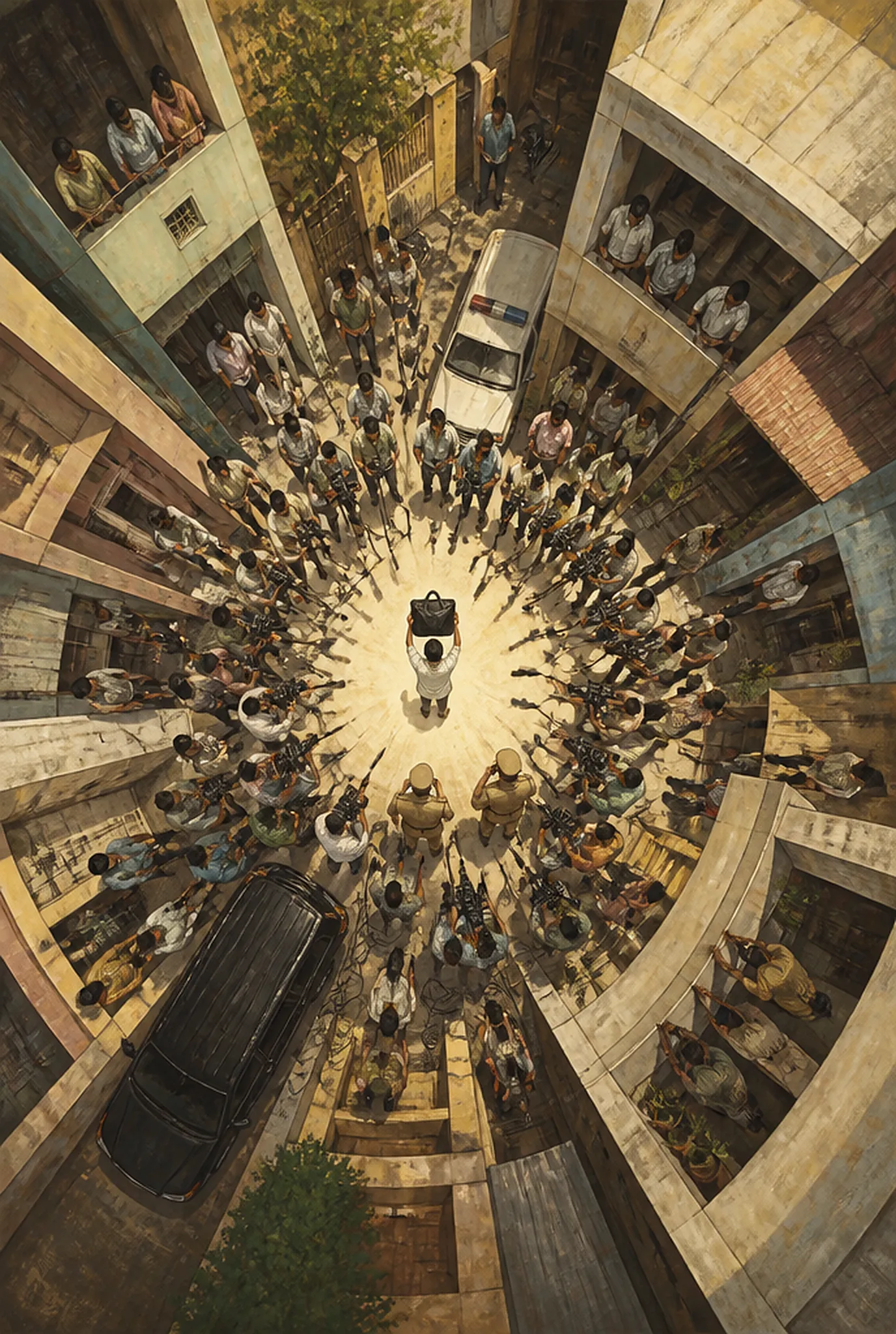
That evening, in the wrecked living room, Varun finally says the thing he has been holding. The loophole Ramanujam sold for one comma became Medavakkam City. It is the project Varun's mother's jewellery is buried in.
The old man has spent forty years being right for a living and has nothing. He goes into the kitchen and comes back with two plates. He watches Varun eat with great attention and no expression, and serves him more without being asked.
In the morning there is no Suprabatham on the ground floor. The tulsi is dry.
At the riverbank, Varun stands in a white veshti doing what a son does, because there is no son here.
Then a car comes down the mud track. Dan stands at the edge of his father's funeral like a visitor. Varun does not make a speech. He turns the burning log around, holds it out handle first, and waits until Dan takes it.
Ramanujam recorded a video that last night, the way a lawyer dictates a statement. This house is Varun's. You are my son, but I came to see him as one too. And then, before he reaches to stop the recording. Call me on Sunday.
The last morning, Thamarai asks what actually happened. He tells it. And for the first time in her life, she believes him.
Varun does the work, keeps the promise, stays late. Every one of those habits is used against him. The film never argues that he should stop. It just shows the bill.
Eighty lakhs passes through nine pairs of hands and every person has a reasonable claim on it. The film gives every one of them their best argument and refuses to referee.
Ramanujam did not commit a crime. He pointed at a gap in a document, once. That comma became a housing project. The man who found the loophole and the family who fell through it live one floor apart, and neither knows it until the last act.
The film opens with Varun inventing a heroic past off shop boards on the road, and his daughter catching him. It ends with him inventing a heroic present, and his daughter believing him.
Nothing in between has made him braver. It has just made him a father she needs to believe in. That is the whole film, and it is played as a laugh.
A son who will not come home. A father who serves a second plate to a stranger because he has served that plate before, in that kitchen, to a boy. The film ends by putting an inheritance in the wrong hands and making that feel exactly right.
Narrows as the film tightens. Block One is a city. By Block Four we are in one living room lit by a pooja lamp.
One motivated source per scene. Sodium lamp, tube light, pooja lamp, window, fire.
A temple bell. A pressure cooker. Suprabatham from a small speaker on a stack of law books, which is how we learn a man has died.
A tap that will not run, two barrels carried up at 3 AM, a dry tulsi in a whitewashed pot.
A number plate, a door, the last two digits of a serial on a five hundred rupee note.
Plaiting hair, tying rope, holding a burning log out handle first.
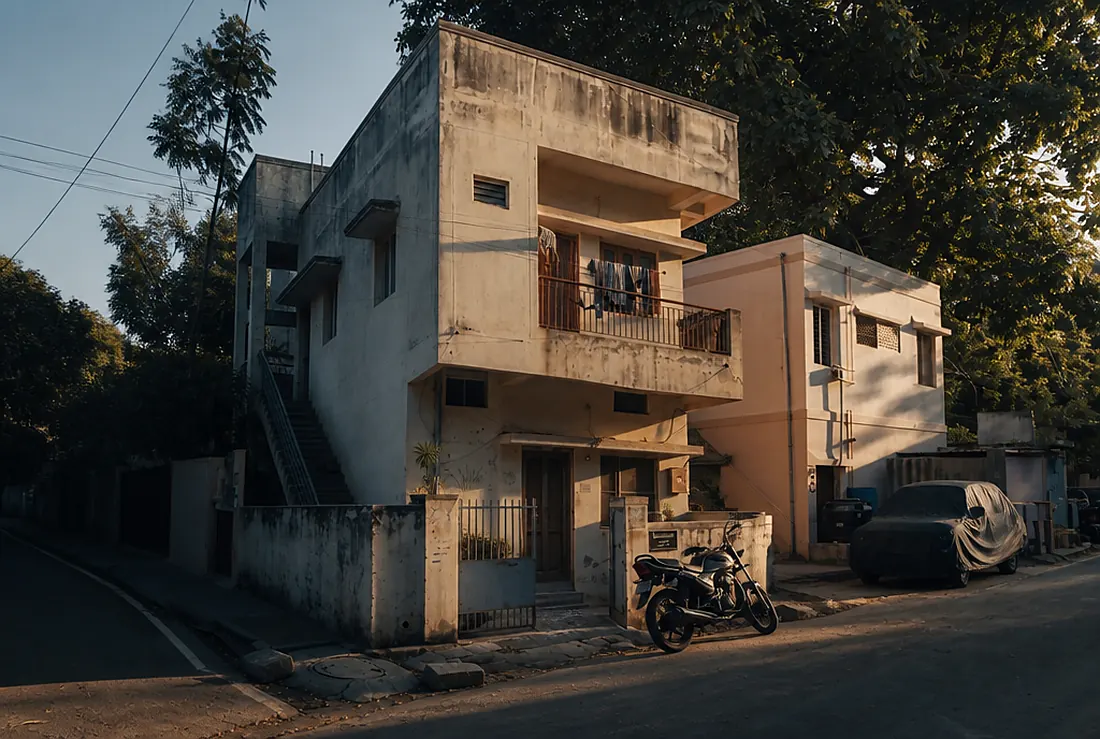
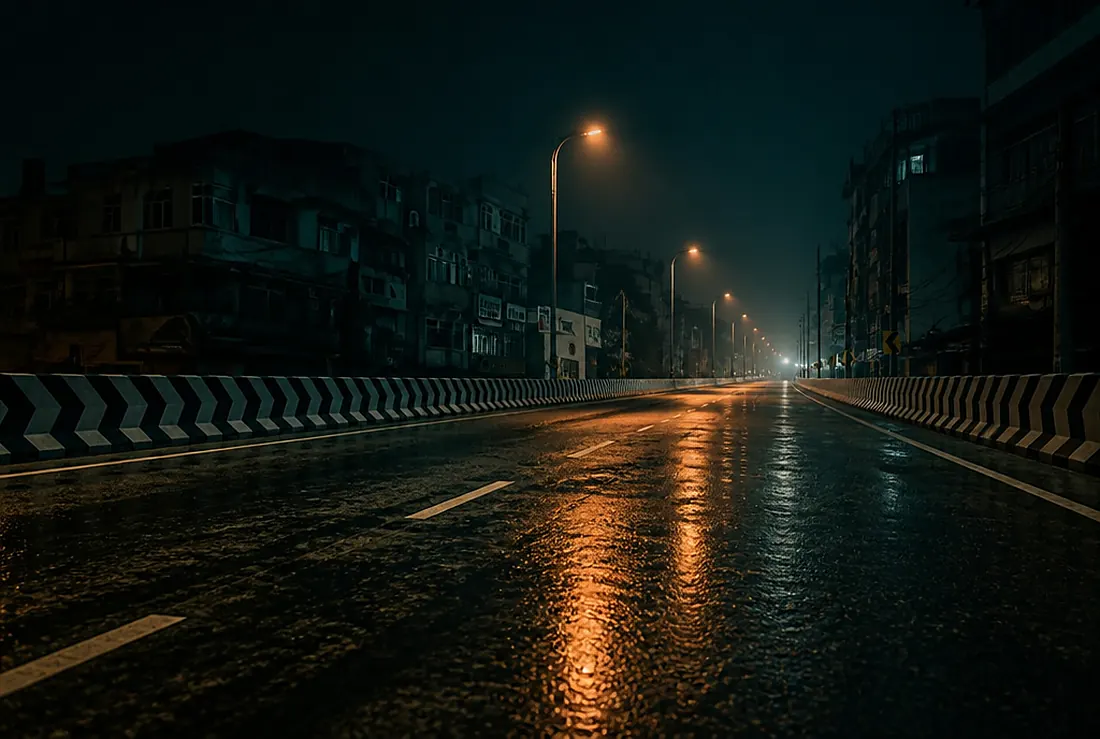
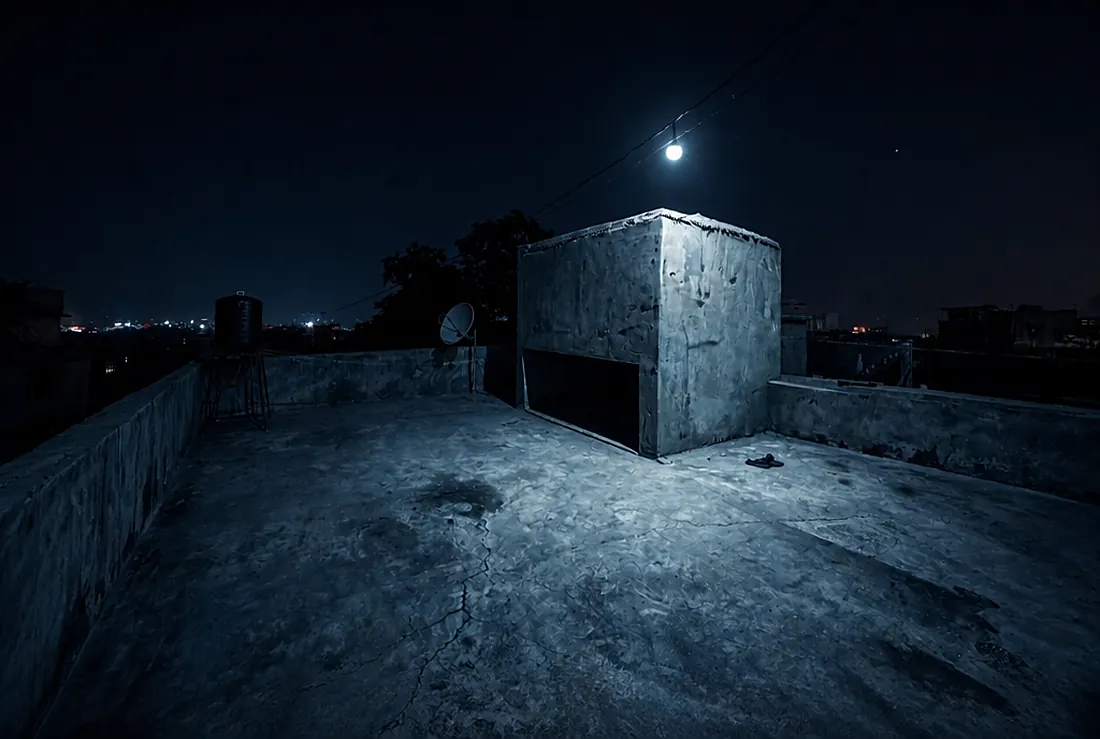

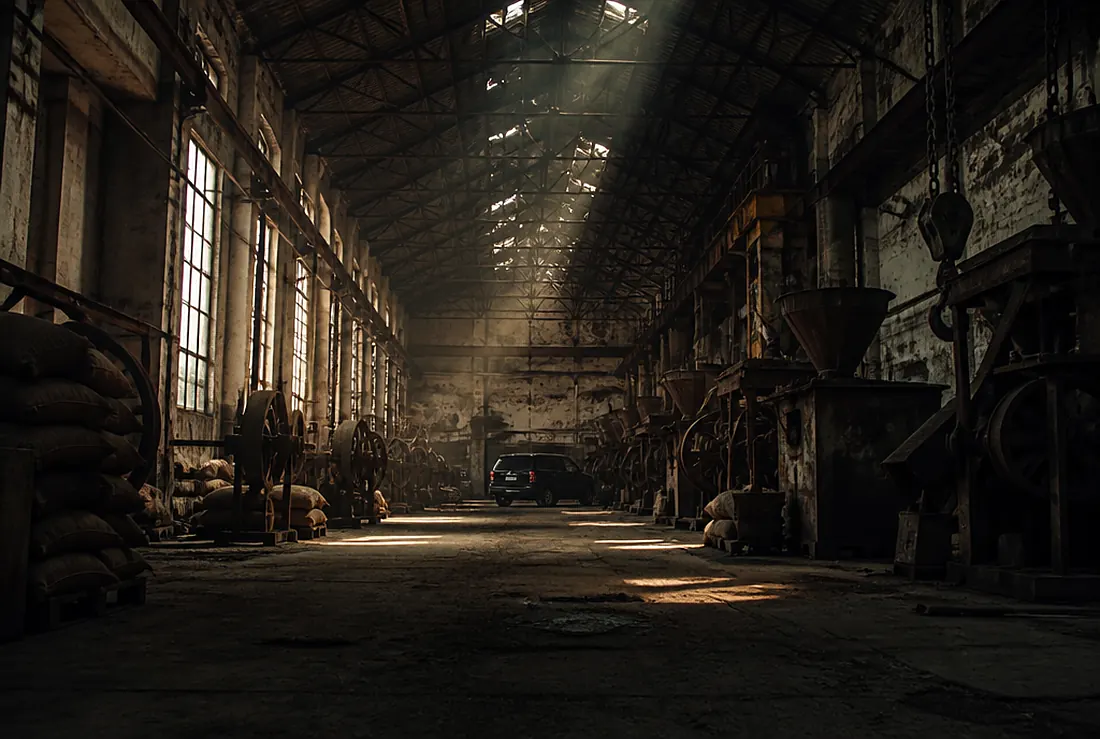

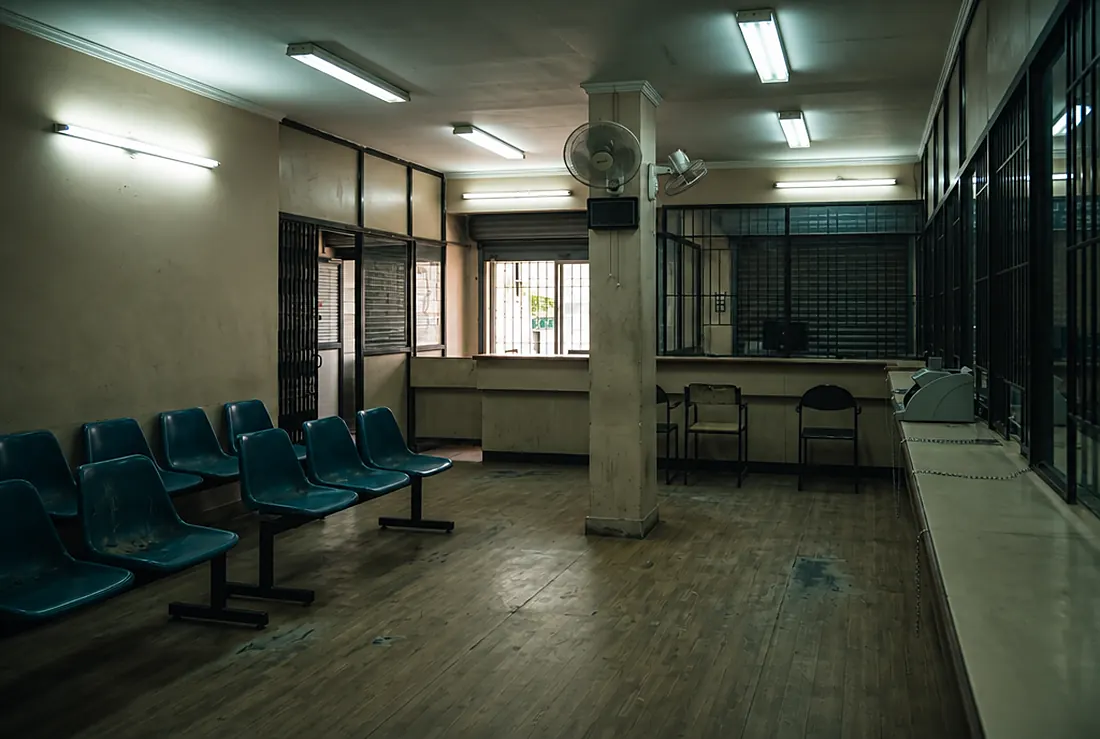
The Tamil audience has shown, repeatedly, that it will turn up for a small scale crime story about ordinary people who make one bad decision.
Provided it is funny, provided it is specific, and provided it does not flinch at the end.
Tank You is built on the three anxieties that sit in every urban middle class household in this state. A job that can be taken away in one polite conversation. An apartment that exists only on paper. And a child who is watching everything you do.
A separate character reference book covers all thirteen roles, with casting notes and audition scenes.
The end